
Kids in the Kitchen: What I Teach at Each Age (and Why It Matters So Much to Me)
I grew up in the 90s with divorced parents who both worked full time and did their best to provide in two separate households.
My mom was a rockstar. Our house was always clean, and she never failed to have dinner on the table, even when it was simple. But in the 90s and early 2000s, it just wasn’t on anyone’s radar, at least not ours, that kids should be learning homemaking skills along the way. I was busy with high school, working, and getting into a good college on scholarship. It honestly never crossed my mind that there were important home skills I was missing.
Fast forward to getting married… and I had zero cooking or kitchen management skills.
I didn’t know how to grocery shop well. I didn’t know how to plan meals. I didn’t know how to cook anything. It was a steep uphill learning curve.
Over the years, though, something shifted. I absolutely fell in love with cooking. And now, somehow, I’ve written five cookbooks (something newlywed Jami never could have dreamed of).
But here’s the thing: I want something different for my kids.
I don’t want food to feel like a constant uphill battle when they become adults. I want them to be confident in the kitchen. I want them to know how to feed themselves and others well. And honestly? The kids have a TON of fun doing it.
If you’re ever looking for ways to keep kids busy without screens, teach them how to cook and let them whip up treats whenever they like. It’s one of the best investments you can make.
Why Kids Have Always Been in My Kitchen
Inviting my children into the kitchen has always felt very natural to me.
I love being in the kitchen experimenting, baking, and creating. So what do you do when you’ve got a 1-year-old, a 3-year-old, and a 5-year-old who just want to be wherever you are?
You hand them a spatula, a spoon, a few chocolate chips and let them “cook” right alongside you.
You invite them into the good work set before you.
Whenever I post about cooking with my kids or them learning new kitchen skills, I get asked, without fail, “How do you actually do this?”
What’s age-appropriate?
How do you manage the mess?
Is it safe?
So let me share what this has looked like in our home, age by age.
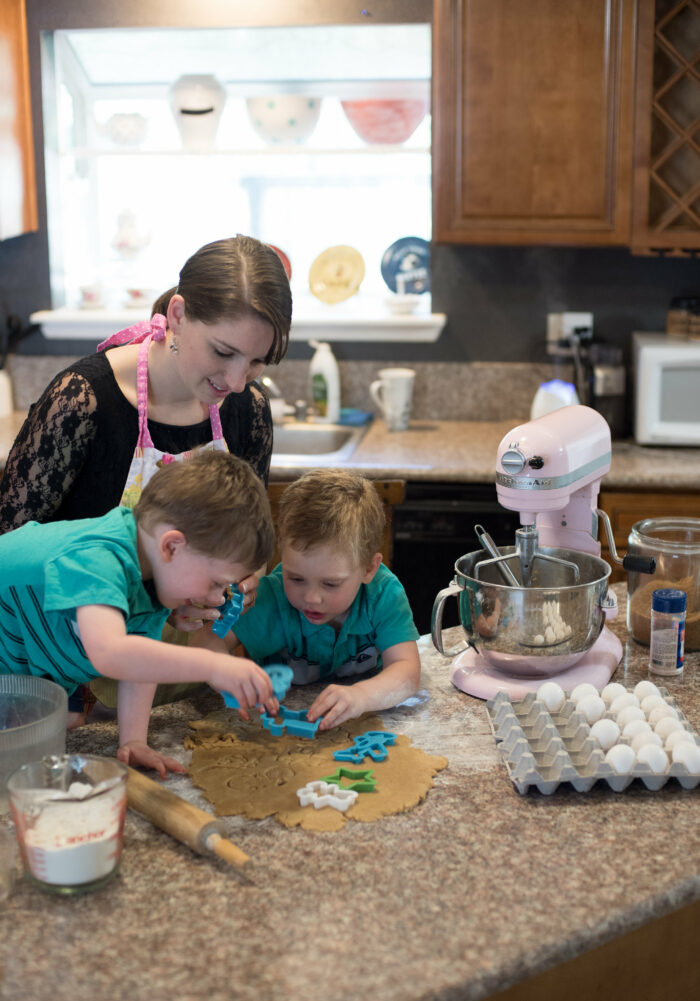
👶 Toddlers (1–3 years old)
At this age, the goal is simple: invite them into the work.
Yes, it’s messier.
Yes, it takes longer.
No, I don’t say yes every single time.
But whenever possible, I invite them into the kitchen with me.
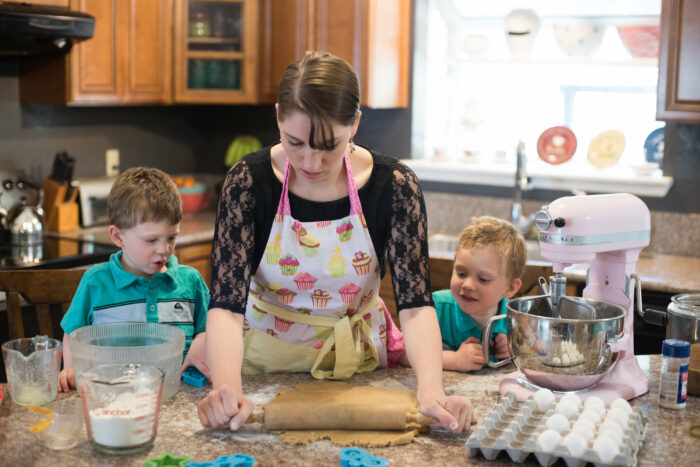
I’ll hand them a measuring cup and gently guide their hands as they dump flour into the bowl. They throw berries into batter. They hold the salt until it’s time to pour. They stir and sample far more than they help. 😉
And here’s my secret trick for the days when you really just need dinner done:
Set them up next to you with their own little station. A small bowl. A spoon. A little flour. A few chocolate chips. Let them mix up their own delightful creation while you get the real cooking done.
Everyone feels included — and you still get dinner on the table.
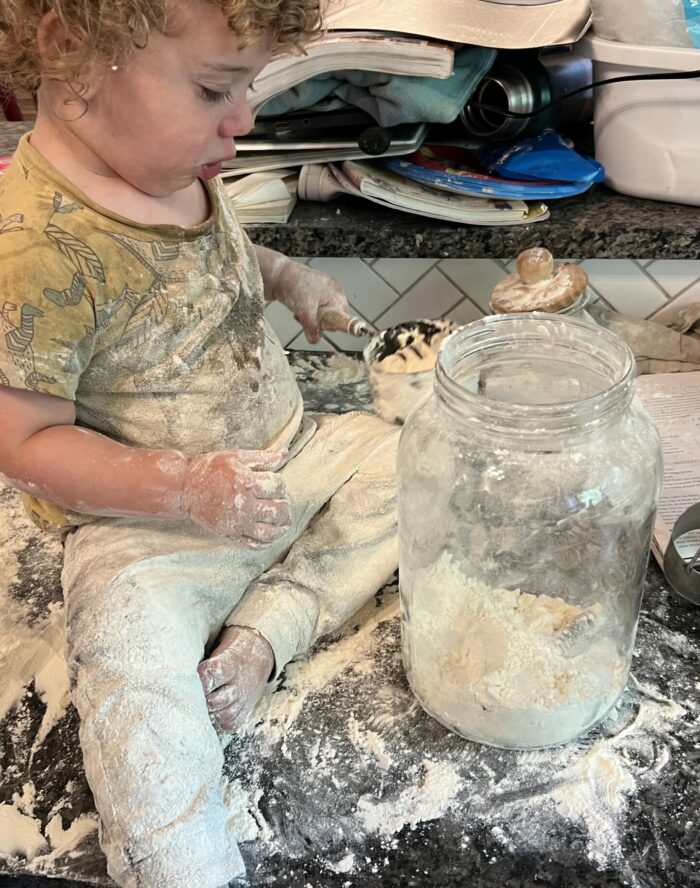
🧒 Preschool / Early Elementary (4–7 years old)
This is where the real fun begins.
When you invite toddlers into the kitchen consistently, they pick up far more than you realize. By ages 4–5, kids are genuinely capable helpers.
They can:
Run to the fridge to grab eggs
Measure out oil or water
Mix ingredients
Help pour
Roll out dough
They will still make messes, probably a lot of them, but little by little the spills decrease and their confidence grows.
My son Maverick (age 5) has been helping me in the kitchen since he was about one. Just this past week, I started teaching him how to make his own eggs on the stove. He did about 95% of it himself while I instructed. The second time, I stayed nearby while he led the steps. In another week or so, he’ll likely be able to make his own eggs start to finish.
This age is perfect for learning how to crack eggs, measure, pour, stir, and roll out dough. They won’t be making full meals on their own yet — but you are laying the groundwork for lifelong skills.
And as a homeschool mom, I’ll just say this: one of the best ways to learn fractions is by measuring ingredients.
👦 Older Elementary (8–11 years old)
This is when kids can start taking ownership of full recipes.
My daughter (almost 9) makes a recipe completely on her own at least 3–4 times a week. Yesterday she made snickerdoodles. Today she made brownies.
When she was 6–7, she cooked alongside me. I explained why we did certain steps. Slowly, I let her start reading recipes, gathering ingredients, and thinking through the process. Over time, she needed less and less help.
Now she mostly comes to me only if she has questions or needs clarification, but she’s capable of making a lot on her own.
Her older brothers (10–13) can also make quite a bit independently. Their training now focuses on more advanced skills like cheesecake, apple pie, soup stock, and all the bread.
This isn’t formal “lessons.” It’s simply teaching as we cook together.
If you have kids over 8–9 years old — start teaching them full recipes. They truly can do it.
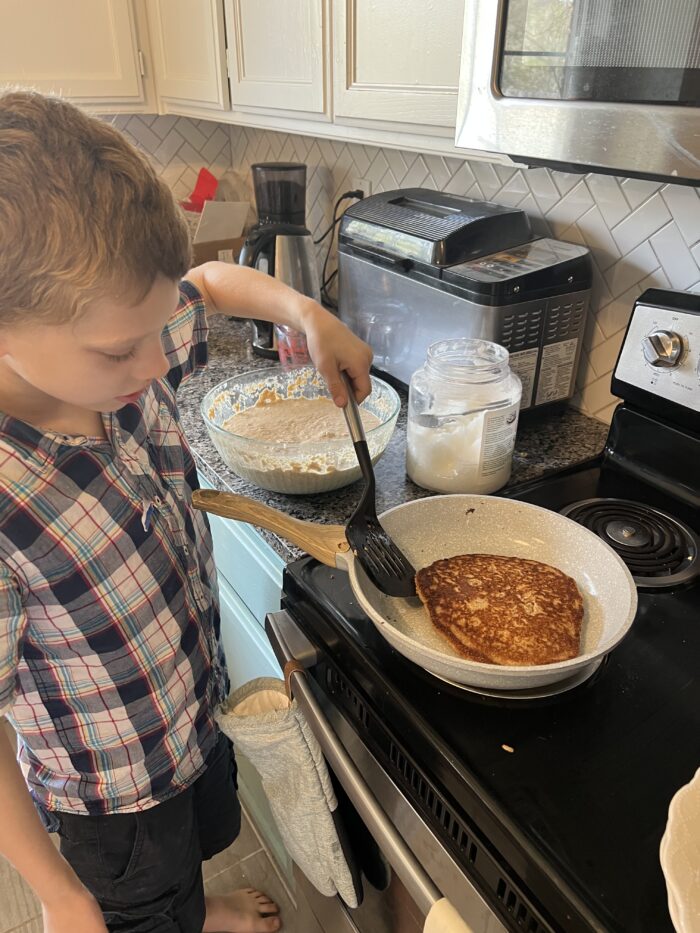
🧑🍳 Teens
My next step with our older boys will be teaching them how to:
Plan full menus
Build grocery lists
Manage multiple dishes at once
Think through timing and budgeting
They’ll take the foundation they’ve built and begin managing the full process of feeding a household. This is real life preparation.
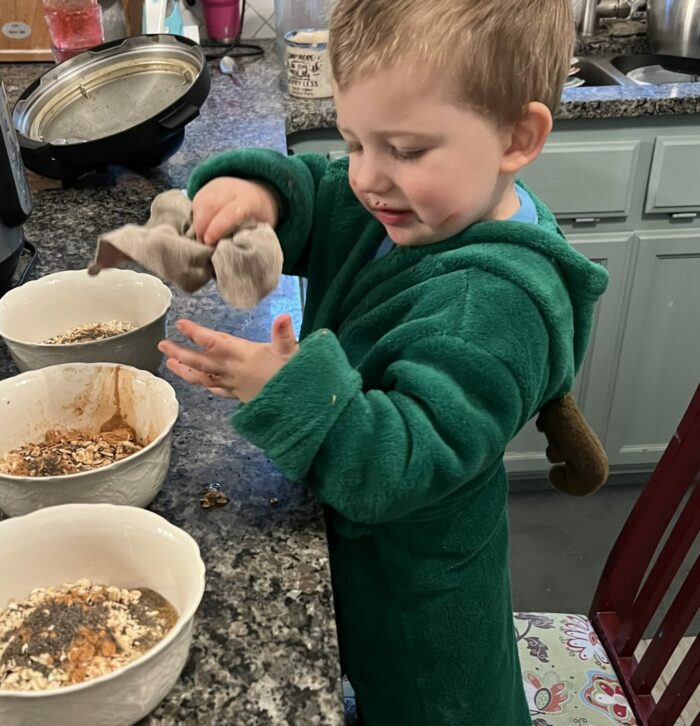
🔥 Safety (Because Everyone Asks)
Kids absolutely need to learn how to handle real kitchen tools, appropriately and gradually.
My toddlers are watched constantly and never near knives or hot stoves.
But my 5-year-old is learning basic knife skills and how to cook eggs on a skillet with supervision.
Could he nick a finger or get a small burn? Possibly. We minimize risk as much as we reasonably can — but learning always involves some risk, just like riding bikes or rollerblading.
A small mistake often teaches caution faster than a lecture ever could.
Use wisdom.
Supervise closely.
Build skills slowly.
Trust your instincts.
Why This Matters So Much to Me
I didn’t grow up learning these skills. I had to learn them as an adult, the hard way.
I want my kids to step into adulthood confident, capable, and joyful in the kitchen. I want them to bless their future families and communities through hospitality and practical skill.
And honestly? I just love watching their confidence grow.
Mess fades.
Skills remain.
Memories multiply.
If You’re Nervous to Start
Start small.
Let them stir.
Let them pour.
Let them crack eggs.
Let them “cook” beside you.
It will be slower at first.
It will be messier at first.
It will be imperfect at first.
But it will be worth it.
You’re not just making food — you’re forming capable humans.